
Bureau Européen de l'Objection de Conscience | Europäisches Büro für Kriegsdienstve
User login
EBCO report on conscientious objection to military service in Europe 2025 online
How militarised are you?
CoE interactive map
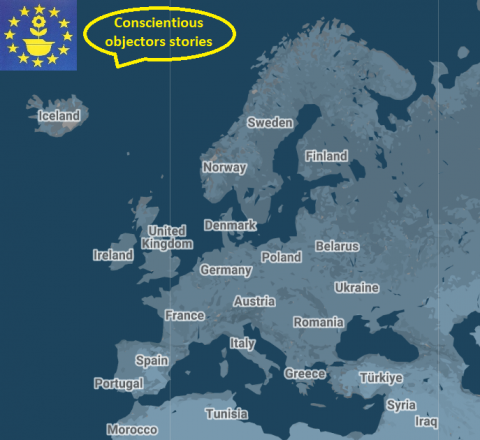
Conscientious objectors stories (videos)
#ObjectWarCampaign

EBCO Newsletter "The Right to Refuse to Kill"



Lithuania

Previous reports: 2024 | 2023/24
| Conscription currently imposed? | Yes |
Suspended 2009. Reinstated 2015. |
||||||
| Conscientious objection first recognised | 1990 |
Law on Substitute Service of the Lithuanian Soviet Socialist Republic Constitution, 1992, Article 139 Law on National Conscription, 1996 |
||||||
| Current provisions | ||||||||
| Duration |
|
|||||||
| CO release of professional soldiers | – | No specific provisions, but grounds of conscience would be considered valid. Refusal could be appealed to court. | ||||||
| Minimum recruitment age | 18 | Conscription from 19 | ||||||
| Military expenditure1 |
|
|||||||
Principal EBCO concerns
-
No recognition of the right to conscientious objection exists for reservists, conscripts or military personnel during or after their service.
-
Asylum applications of foreign nationals claiming fear of persecution due to their conscientious objection in countries like Belarus or Russia are rejected.
Based on replies by the Parliamentary Ombudsperson’s Office of Lithuania, EBCO’s Lithuanian member, Our House Lithuania,2 and public information:
Developments
Amendments to legislation on alternative service were adopted in 2025 and entered into force on 1 January 2026:
-
Civilian model: According to the government, a civilian model has been implemented where the alternative service has become of “genuinely civilian nature independent from control and supervision of the military”.3 The administration of alternative service has indeed been transferred to a civilian institution (Agency of Youth Affairs), the previous terminology of “conscripts” changed to “draftees to perform alternative national defence service”, and the Ministry of Social Security and Labour was empowered by law to issue further Resolutions for the implementation of the alternative service.
-
Health checks: Draftees to alternative service are no longer required to meet military health requirements and be examined by military committees. Only health requirements as in other spheres of employment apply and are to be checked in public healthcare.
-
Inclusion of NGOs: Service can now also be performed in public benefit non-governmental organisations, in addition to state and municipal institutions. Representatives of NGOs participate in the committee deciding on alternative service applications.
-
Increased duration: From 10 to 12 months.
The amendments also included changes to the military service which:4,5
-
provide for conscription to compulsory initial military service of young people immediately after school (18–22 years), with medical examination and military registration at the age of 17;
-
revise age limits and deferment conditions for conscription, including for students;
-
extend the age limit for voluntary service up to 39 years;
The need to reform the alternative service system and to recognise conscientious objection were previously highlighted in judgments of the European Court of Human Rights (ECtHR) in the cases of Teliatnikov and Rutkauskas, with the court issuing its decision on the latter in August 2025 (see the Council of Europe chapter for details).
Conscription provisions and procedures
Initial military service is compulsory, reinstated in 2015, and governed by Law “On the Organisation of the National Defence System and Military Service”6 which regulates:
-
the types of military service
-
the procedure for fulfilling military service obligations,
-
the specifics of civil service.
Criminal law consequences for evasion are established in articles 314-316 of the Criminal Code.7
Men of age 18-23 are liable for conscription8 with lists being formed annually with a lottery system that picks a subset of those eligible;9 in certain cases, obligations may remain until the age of 26, including due to deferments related to education.10 Those who do not report for duty, as well as conscripts who have acquired professions (qualifications) that are in short supply in the Lithuanian army, will be called up until they reach the age of 31.
The typical duration is 9 months (76% of conscripts liable in 2026). A duration of 3 months is offered to conscripts with “qualifications that are lacking in the Armed Forces” (2% of conscripts in 2026). Students at higher education institutions can serve under junior officer leader training programmes, which last 160–200 days split in parts across a time span no longer than 3 years (13% of conscripts in 2026). Conscripts can also serve under basic military training or military specialty qualification programmes, lasting 90–120 days and similarly split in parts across a time span no longer than 3 years (9% of conscripts in 2026).11
Reserve service
There are two types of reserve service: active reserve service and other reserve service.
The duration of active reserve service is 15 years from the date of assignment to the active reserve. Conscripts assigned to the active reserve (up to the age of 65)12 participate in training or exercises for 20 to 90 days and perform military service during mobilisation and wartime.
Other reserve service may last up to 14 days per year and involves participation in training or exercises, or military service during mobilisation and wartime.
Draft evasion/refusal
Latest data from 2023 shows 14,000 fines applied for “evasion/violations of military service obligations”, more than 450 pre-trial investigations, and 5 conscripts having faced criminal liability.13
Conscientious objection provisions and procedures
Following the legislative amendments, secondary legal acts to implement the reform of the alternative service are expected from the Ministry of Social Security and Labor with a first draft being shared at the end of 2025.14
Application procedure
Applications for civil service must be sent before the deadline specified in the annual conscription list to the regional unit of the Military Conscription and Recruitment Service, setting out the reasons for refusal which must be based on “religious or pacifist beliefs that prevent the person from performing service involving the use of weapons, special means, or coercion”15 accompanied with supporting information. Decisions are taken by the Commission for the Examination of Applications by Conscripts for Alternative National Defence Service,16 comprising representatives of religious communities, higher education and science institutions, and non-governmental organisations.17 No data is available on statistics and grounds of rejections.
The Commission's decisions may be reviewed administratively upon receipt of additional information about new circumstances that may affect the decision. Challenging a decision is also possible with a direct complaint to an administrative court.18
Terms of alternative service
The alternative service is administered by the Agency of Youth Affairs of the Ministry of Social Security and Labor. It lasts 12 months, compared to 3-9 months in the military.
According to the Ombudsperson’s Office, a monthly allowance of 4.6 times the basic social benefit (BSI) (4.6 × 74€ = 340.4€ in 2026)19 is provided for living expenses, accommodation if the place of the service is outside the municipality of permanent residence, and cash compensation for food expenses for each day of the health check. Conscripts similarly receive a monthly allowance of 4.6 BSI (340.4€) but may also receive monthly top-ups of 2 to 4 BSI (148-296€) depending on the evaluation of their service whereas other bonuses exist if the conscript enlists voluntarily before their call-up or after completing the service with an “excellent” evaluation. These bonuses are not available to those performing alternative service.
Service is performed in state or municipal institutions or agencies and also, since 1 January 2026, in non-governmental organisations of public benefit working in the fields of protection of persons with disabilities, reduction of social exclusion, promoting education and culture, providing humanitarian aid, protecting health, and civic education, or performing work that is beneficial to society and not related to the use of weapons, special measures, or violence.
The place of service is selected in the municipality of actual or registered residence of the objector or their family members, or in case of persons residing outside of Lithuania and without family members in Lithuania, in a place of choice. No choice is given for the institution where service will be performed.
Refusal to perform
The amended Criminal Code that came into force on 1 January 2026 introduced separate provisions regulating the evasion of alternative service. Similarly to the evasion of military service, it is now punishable by arrest or imprisonment for up to three years if carried out by means of deception. Avoidance of alternative service during wartime may be punished by imprisonment of five to eight years, depending on whether it is carried out by means of deception.20
Voluntary recruitment
Voluntary enlistment into regular 9-month initial military service is possible for men, if not selected in the conscription list, and women, with a 30% allowance bonus provided. In 2025, over 700 people volunteered to serve alongside 3,865 conscripts.21
Citizens of ages 18-65, men and women, can also join the National Defence Volunteer Forces with a contract of up to 4 years with service usually organised on weekends with an average of 20 to 50 days of service per year.22
Incentives are provided in the form of monetary allowances (as mentioned in “Terms of alternative service” above), deferring housing loan payments, career and educational advantages (e.g. permanent contract in the armed forces, or security/defence-related structures, grants to employers who hire persons who completed military service).
The government also promotes voluntary service through official websites and social media of the Armed Forces,23 campaigns emphasising “civic duty”, “self-realisation”, and “skills and career”,24 and participation of representatives of the armed forces or the Lithuanian Riflemen’s Union in public events, career fairs and career days.
Conscientious objection during and after military service
No recognition of the right to conscientious objection exists for reservists, conscripts or military personnel during or after their service.
Asylum for conscientious objectors
According to Our House’s reporting, Lithuania has become a country of destination for citizens of Belarus and Russia who have left their countries due to conscientious objection to military service or unwillingness to participate in armed conflicts. For many of them, seeking asylum in Lithuania is linked to a well-founded fear of criminal prosecution, long-term imprisonment or other serious human rights violations in their countries of origin. Despite this, migration authorities often refuse to grant international protection to such applicants.
Applications are frequently rejected on the grounds that compulsory military service constitutes a general civic duty and does not, in itself, amount to persecution. This approach contradicts the provisions of the International Covenant on Civil and Political Rights,25 and fails to take into account the nature and severity of penalties for refusal of service in Belarus and Russia, as well as the link between persecution for refusal of military service and protected grounds, including freedom of conscience and political opinion. Particular concern is raised by the practice of qualifying conscientious objectors as posing a “threat to national security”.26 Even in cases where courts conclude that there is no individual threat posed by the applicant and annul the relevant decisions, state security authorities retain the possibility to reinitiate similar assessments within migration procedures.
Documented cases show that such parallel and unsynchronised application of migration and “security” mechanisms may lead to prolonged legal confrontation without a final determination of the applicant’s legal status, especially in cases where applicants have previously undergone military service or training. Such decisions are often taken without transparent criteria and individualised assessment, which may restrict access to asylum procedures and effective judicial review.
In addition, in practice, access to effective legal remedies in such cases is significantly limited by financial barriers. Since 2025, free legal aid in Lithuania has been provided to asylum seekers only at the first stage of appeal. In the event of an unsuccessful appeal, the applicant is left without legal support, and further defence is possible only through paid legal services, which are often inaccessible to citizens of Belarus and Russia due to their high cost.27
As a result, some conscientious objectors have been placed in detention or have faced the risk of removal to their country of origin, i.e. Belarus or Russia.28 These practices create a real risk of violation of the principle of non-refoulement, which prohibits the return of individuals to countries where they face persecution, torture or other serious human rights violations. International standards, including UNHCR guidelines, explicitly recognise conscientious objection to military service as a possible ground for refugee status.
It is important to note that after a final refusal of asylum, a person is obliged to leave Lithuania. In cases of refusal of asylum in Lithuania, there are no instruments for legalisation of the applicant by any other means. At the same time, in April 2023 Lithuania adopted a law on restrictive measures, after which restrictions were introduced on the issuance of visas and certain other statuses for citizens of Belarus and Russia.29 Taken together, these factors significantly narrow alternative pathways to lawful status after an asylum refusal.
Militarisation of the education system
From the 2024–2025 school year, a three-day Civics and Defense Skills Course (PGĮK) organised by the Lithuanian Riflemen’s Union became mandatory for all 7-9th grade students in general education schools, aiming at “civic and patriotic education” and “preparedness for emergencies and crises.”30 It is planned to expand to grades 5–6 from 2028-2029.31
The military does not organise programs for students under the age of 18. However, a voluntary “Youth Riflemen” programme is available within the Lithuanian Riflemen’s Union for young people aged 11–18.32
A Cadet Education Programme was introduced in 2024 to allow municipal and state gymnasiums to offer cadet education including “training in basic national defense skills” based on practices by existing schools like the General Povilas Plechavičius Cadet Lyceum.33
- Military expenditure figures are estimates published by SIPRI (The Stockholm International Peace Research Institute) in April 2026.↩︎
- More info about the organisation at: https://news.house↩︎
- Communication from Lithuania concerning the group of cases of Teliatnikov v. Lithuania (Application No. 51914/19), DH-DD(2026)208, 06/02/2026. Available through: https://search.coe.int/cm?i=09125948802a909d↩︎
- Nine key changes coming into effect in Lithuania in 2026, LRT, https://www.lrt.lt/en/news-in-english/19/2794135/nine-key-changes-coming-into-effect-in-lithuania-in-2026↩︎
- Lithuanian military publishes this year’s conscription list, LRT, https://www.lrt.lt/en/news-in-english/19/2457222/lithuanian-military-publishes-this-year-s-conscription-list↩︎
- https://www.e-tar.lt/portal/en/legalAct/TAR.E9CE9C91C255/WSNKNUOrjO↩︎
- https://www.e-tar.lt/portal/en/legalAct/TAR.2B866DFF7D43/asr↩︎
- https://www.lrt.lt/en/news-in-english/19/2457222/lithuanian-military-publishes-this-year-s-conscription-list↩︎
- https://www.karys.lt/en/military-service/conscript-service/conscripts/400↩︎
- https://www.lrt.lt/en/news-in-english/19/2296482/lithuanian-parliament-adopts-conscription-reform↩︎
- https://www.karys.lt/en/communicate/news/list-of-conscripts-for-this-year-published-on-karys.lt/765↩︎
- https://www.karys.lt/en/military-service/conscript-service/active-reserve/403↩︎
- https://www.lrt.lt/en/news-in-english/19/2213659/14-000-fines-issued-for-dodging-military-service-in-lithuania-in-2023↩︎
-
Draft order of the Minister of Social Security and Labour of the Republic of Lithuania on the
Implementation of The Law on Conscription And Alternative National Defence Service Of The Republic Of
Lithuania, registered on 31 December, 2025, No. 25-19742, https://e-seimas.lrs.lt/portal/legalAct/lt/TAP/b64d14d0e65c11f0948bfb5fa1e0c51b?positionInSearchResults=0&searchModelUUID=f2a42e9f-b959-4ea2-a52b-417755b6545b↩︎
- Law on Conscription, Article 12(1). https://www.e-tar.lt/portal/lt/legalAct/TAR.E9CE9C91C255/asr↩︎
- Order of the Minister of the National Defence “On the Regulation of the Commission for the Examination of Applications by Conscripts for Alternative National Defence Service”, May 5, 2022, No. V-367, https://www.e-tar.lt/portal/lt/legalAct/a5aaffe0cc5011ec8d9390588bf2de65↩︎
- https://www.zmogausteisiugidas.lt/en/themes/civic-participation/military-service/refusal-to-perform-military-service-and-alternative-service↩︎
- https://www.zmogausteisiugidas.lt/en/themes/civic-participation/military-service/how-to-complain↩︎
- https://madeinvilnius.lt/en/news/Lithuanian-news/The-government-has-approved-new-basic-support-amounts--various-payments-will-increase-next-year/↩︎
- Article 314. https://www.e-tar.lt/portal/en/legalAct/TAR.2B866DFF7D43/asr↩︎
- https://www.lrt.lt/en/news-in-english/19/2457222/lithuanian-military-publishes-this-year-s-conscription-list↩︎
- https://www.karys.lt/en/military-service/optional-methods-of-service/national-defence-volunteer-forces/402↩︎
- https://kariuomene.lt/en/structure/other-units/military-conscription-and-recruitment-service/23687↩︎
- https://www.karys.lt/tarnybos-budai/savanoriska-nenuolatine-karo-tarnyba/40↩︎
- https://www.un.org/en/development/desa/population/migration/generalassembly/docs/globalcompact/A_RES_2200A(XXI)_civil.pdf↩︎
- https://ebco-beoc.org/press-release/2025-02-14-protection-of-russian-belarusian-conscientious-objectors-in-the-eu↩︎
- https://teisesvartai.lt/advokatu-kainos/↩︎
- https://objectwarcampaign.org/2023/08/17/report-on-the-situation-of-belarusian-conscientious-objectors-and-draft-evaders-in-lithuania/↩︎
- https://www.lrs.lt/sip/portal.show?p_r=35403&p_k=2&p_t=284347↩︎
- https://www.gssc.lt/en/publication/citizens-first-total-defense-always-an-interview-with-colonel-linas-idzelis-on-the-lithuanian-riflemens-union-lfpr-vol-44-2026/↩︎
- https://www.lrt.lt/naujienos/svietimas/45/2597312/seime-pirmas-zingsnis-plesti-pilietiskumo-ir-gynybos-igudziu-kursa↩︎
- https://www.sauliusajunga.lt/en/frequently-asked-questions↩︎
- https://www.baltictimes.com/lithuania_to_allow_all_willing_gymnasiums_to_offer_cadet_education/↩︎
| Attachment | Size |
|---|---|
 Lithuanian NHRI_Questionnaire for EBCO Report 2025_Conscientious objection.pdf Lithuanian NHRI_Questionnaire for EBCO Report 2025_Conscientious objection.pdf | 634.65 KB |