
Bureau Européen de l'Objection de Conscience | Europäisches Büro für Kriegsdienstve
User login
EBCO report on conscientious objection to military service in Europe 2025 online
How militarised are you?
CoE interactive map
Conscientious objectors stories (videos)
#ObjectWarCampaign

EBCO Newsletter "The Right to Refuse to Kill"


Russian Federation
|
Conscription currently imposed? |
Yes |
|
||||
|
Conscientious objection first recognised |
1993 |
Constitution, Article 59.3 |
||||
|
Current provisions |
|
|
||||
|
Duration |
Military service |
Civilian service (% of military) |
||||
|
12 months |
21 months (175%) Unarmed military service 18 months |
|||||
|
CO release of professional soldiers |
Not permitted |
|
||||
|
Minimum recruitment age |
18 |
Admission to some military schools from 16 |
||||
|
Population |
Total |
% males 15-19 |
Thus approx. annual cohort reaching 18 |
|||
|
141,505,000 |
2.8 |
792,428 |
||||
|
Armed forces[1] |
Total strength |
Of which conscripts |
Compared to annual cohort above |
|||
|
c1,100,000 |
c550,000 (50%) |
138.8% (conscripts 69.4%) |
||||
|
Military expenditure |
$ (% change from 2022) |
Per capita |
% of GDP |
|||
|
$109,454m (+6.9%) |
$757.8 |
5.9% |
||||
Current situation & recent developments
Feedback from organisations
As reported by EBCO’s Russian member, the Movement of Conscientious Objectors[2]:
The period from March 2023 to March 2024 saw a logical continuation of the changes that began in Russia after the Russian army invaded Ukrainian territory on February 24th, 2022, and separately after Russian President Vladimir Putin declared mobilisation on September 21th, 2022.
The parliament, executive bodies, and military commissariats focused their efforts on implementing new norms and rules regulating military-civil relations. During conscription, we saw active police raids. Mobilisation for war with Ukraine continued in the form of persuasion or threats.
– Changes in Legislation during Wartime
In 2023, a large number of legislative novelties were adopted in the field of military-civil relations. They affected conscripts, who in Russia are required to undergo military service or alternative civilian service according to general rules, as well as servicemen serving under contract and mobilised for war with Ukraine under the presidential decree of September 21st, 2022.
Change in conscription age: In March–April 2023, the State Duma of the Russian Federation considered and adopted amendments to change the conscription age. Initially, they wanted to change the conscription age from 18–27 to 21–30, but in the end, parliament changed only the upper limit so that starting from January 1, 2024, citizens in Russia will be conscripted for military service at the age of 18 to 30.
The adoption of the law put at risk of possible conscription citizens aged 27 to 30. As of 2023, a conscript who reaches the age of 27 must be enrolled in the reserve of the armed forces of Russia. The legislation does not specify what the procedure for enrolling in the reserve should be, so human rights activists do not exclude that men who turned 27, 28, or 29 in 2023 may face the risk of conscription from 2024. However, as of March 2024, there have been no reports of attempts to conscript such citizens.[3]
Change in the maximum age for being in the reserve of the armed forces: In July 2023, Vladimir Putin signed a law extending the maximum reserve service age by five years for specific military ranks, including soldiers, sailors, sergeants, and officers. The new age limits are set at 40, 50, and 55 years for different categories, with senior and junior officers' mobilisation reserve age limits increased to 65 and 60 years, respectively. A transition period until January 1st, 2028, is established for gradual retirement adjustments.
This change will require those who wish to retire from military service permanently at the age of 50 to 55 to remain in the reserve and make them liable to mobilisation for war. In turn, those who have been mobilised or voluntarily signed a contract with the Ministry of Defense of Russia will only be legally allowed to apply for retirement at the age of 65.
Change in the procedure for notifying conscripts – Electronic summons: Another significant legislative change was the change in the procedure for notifying citizens of summons to military offices. Military offices in Russia traditionally issued paper summonses, which were supposed to be handed over to the potential conscript by military office employees or employers at their place of work or study strictly against the conscript's signature. These rules allowed conscripts to legally evade compulsory military service without any problems. Military offices often lacked the human resources to find conscripts and deliver summons to each of them under the conscript's signature.
The new law changed the established relationships. An electronic register of military registration will be created, which will contain a significant amount of data on conscripts and reservists – education, health status, history of crossing the border, work under an employment contract, and other information.
Moreover, a special electronic register of summons will be created. Even without an account in the special electronic system, the military office will be able to impose on the citizen the obligation to appear at the military office. Russian authorities hurried to introduce the described electronic registers from the autumn of 2023, but over time, it turned out that this task exceeds their technical capabilities. As of March 2024, the electronic military registration register and the electronic register of summons are not operational. Moreover, not all necessary by-laws and procedural regulatory legal acts regulating the operation of this register have yet been adopted.[4]
In addition to these innovations, restrictions were introduced that will be imposed on citizens if they do not appear at the military office after twenty days. Restrictions include a ban on leaving the country, a ban on driving or registering a vehicle, a ban on taking out a loan and borrowing, a ban on registering transactions with real estate, putting it on the cadastral register, and a ban on registering as a self-employed person.
In December 2023, Vladimir Putin instructed the Ministry of Defence to put the register into operation from October 1, 2024. With the launch of the register, the restrictions described above will automatically come into effect.
Changes in the procedure for concluding a contract for military service: The active phase of mobilisation in September – November, 2022, was a shock to Russian society. Therefore, in 2023-2024, despite the huge number of rumours about the so-called "second wave of mobilisation," the Russian authorities focused on citizens who can be voluntarily attracted to military offices. Specific requirements for concluding a contract with the Ministry of Defence applied until April 2023, regarding the level of education and the term of service in the conscript army. After April 2023, these requirements were considered obsolete. At the moment, there are no serious requirements for the selection of contract soldiers: the age of 18 and the health category from "A", "Б" or "В" categories allow concluding a contract with the Ministry of Defence.[5]
Sending Prisoners from Correctional Institutions to War: In June 2023, a separate Federal law was adopted allowing the Russian authorities to use prisoners in the war in Ukraine. The selection of specific volunteers to participate in the war was envisaged, except for suspects accused, or convicted of rape, sexual violence, extremist, and terrorist crimes.
The authorities provided for a procedure whereby a person may be exempted from criminal prosecution or his conviction may be completely extinguished in case of receiving a state award or dismissal from military service upon reaching the maximum age (65–70 years), health condition (category "Д"), or due to the end of the mobilisation period in the Russian Federation.
In fact, the law regulated existing relationships regarding the recruitment of prisoners for the war. The first recruitment was initially carried out by the private military company "Wagner" and its leader, Yevgeny Prigozhin. Subsequently, the recruitment of prisoners passed completely under the control of the Ministry of Defense of Russia.
Attempt to Regulate the Activities of Volunteer Formations: In addition to mobilisation and the direct option to sign a contract with the Ministry of Defense of Russia, there is an option to become a volunteer. The volunteer status is legally similar to the status of a person who has signed a contract with the Ministry of Defense of Russia but has several important differences.
Firstly, such individuals are not legally considered military personnel. They are not subject to the norms of legal responsibility applied to mobilised or regular contract soldiers. Such individuals will not be held accountable for committing crimes against military service or damaging military property.
Secondly, such individuals have the chance to enter into a volunteer contract for a period of up to one year, which means they have the opportunity to return home without significant issues. Such an option is not available to those who are mobilised or regular contract soldiers.[6]
In September–November 2023, the Russian authorities attempted to introduce criminal and material liability for volunteers, but as of March 2024, the bills have not been adopted.
Complication of the Procedure for Appealing the Decision of the Draft Board: The mentioned law on electronic summons also affected the procedure for appealing the decision of the draft board. Lawyers and conscripts previously actively used the legal method to suspend the execution of the draft board's decision by filing a lawsuit in court. The military office simply did not have the opportunity to take actions to send the conscript to the army after the initiation of the judicial procedure. This provision was repealed in April 2023. One deputy has introduced a bill to reintroduce it, but as of March 2024, it has not passed the first reading in the parliament.
Strengthening of Administrative and Criminal Liability: Desertion, unauthorised absence from military units, failure to comply with a military order, and other offences under the Criminal Code of the Russian Federation regarding to crimes against military service were supplemented with provisions that increase liability if these are committed during a state of war or mobilisation. It is worth noting that according to "Mediazona" publication data for 2023, Russian courts received 5,024 cases of unauthorised absence from military units (for comparison - in 2022, 1,001 cases were sent to courts), 421 cases of failure to comply with a military order, and 148 cases of desertion.[7]
In October 2023, administrative liability was tightened. It affected not only military service but also military registration issues. Administrative offences with liability were introduced for both individuals and organisations for the first time. In October 2023, employees of Russian organisations were threatened with fines for not organising military registration. There is no doubt that under current conditions, legal entities will provide any information to military offices. Individuals employed under an employment contract or studying in educational organisations have virtually no legal way to evade the draft board.
For example, from October 2023, a fine of 10,000 to 30,000 rubles ($100– $300) is imposed for the failure of a citizen to appear at the military enlistment office without a valid reason. For not informing the military office about leaving the place of residence for more than 3 months, a fine of 10,000 to 20,000 rubles ($100–$200) is imposed. For not providing information necessary for military registration by an organisation's official, a fine of 40,000 to 50,000 rubles ($400–$500) is imposed.
A separate fine has been introduced for failure to assist military enlistment offices in their mobilisation work. For example, fines will be imposed under this article for failure to notify about the need to appear according to the summons or failure to assist in organising notification and appearance at the military enlistment office: from 60,000 to 80,000 rubles — for officials of organisations ($600–$800), from 400,000 to 500,000 rubles — for organisations ($4,000–$5,000).
– Conscription and Mobilisation in Russia
Draft for compulsory military service: Mobilisation for military service in Russia continued according to the planned dates: from April 1 to July 15, 2023, and from October 1 to December 31, 2023. According to the Ministry of Defence of Russia, 147,000 people were called up for military service during the spring-summer campaign, and 130,000 people during the autumn campaign.[8]
Conscripts serving in the army still face the risk of being in combat zones. Russian authorities consider the occupied territories of Ukraine as part of the territory of the Russian Federation. Moreover, legislation does not prevent conscripts from being sent to border areas. Reports have been published by journalists indicating that some conscripts are stationed in the Belgorod region, which is subject to shelling by Ukrainian armed forces.[9] It is worth noting that in March 2022, Russia acknowledged the presence of conscripts on the territory of active combat.[10]
The consolidation of military enlistment offices in the territory of Moscow: In March 2024, information emerged that all military offices in the territory of Moscow would cease their operation. Their functions will be transferred to the level of the "Unified Draft Office of Moscow." This decision, made by the Mayor of Moscow Sergey Sobyanin, contradicts federal legislation. However, it is already clear that the conscription for military service, starting from April 1, 2024, will proceed in Moscow according to new rules. Instead of 146 draft boards formed on a district principle, the conscription campaign will be conducted in one consolidated draft board.
Mobilisation in Russia: A New Strategy: From 2023 to 2024, mobilisation for the war between Russia and Ukraine continued from a legal perspective. However, the active recruitment phase that occurred in September–November 2022 was no longer observed.
It is evident that Russian authorities decided to change tactics in recruiting soldiers. The main emphasis was placed on volunteers among Russian citizens facing difficult financial situations and individuals without Russian citizenship who are working in Russia. While Russian citizens were primarily encouraged by socio-economic changes, a different strategy was chosen for those who acquired Russian citizenship by application or for those without Russian citizenship.
Simplification of the Procedure for Acquiring Russian Citizenship for Foreigners: In 2023, the State Duma of the Russian Federation adopted a new Federal Law "On Citizenship." It included separate provisions for obtaining citizenship for foreigners who signed a contract with the Ministry of Defence for service in the Russian Armed Forces for a period of at least one year. The President was given the authority to determine other categories of citizens and the requirements for acquiring citizenship.
President Putin exercised his powers, and in January 2024, by a separate decree, clarified who could apply for citizenship and what requirements were not imposed on such foreigners. Now, foreigners participating in the war can obtain Russian citizenship without complying with requirements regarding length of residence in the country, knowledge of the Russian language, history of Russia, and the basics of Russian legislation. The Decree also allows the consideration of applications from individuals who are wanted for criminal offences, are serving prison sentences, or have unredeemed or unexpired convictions.
Preferences and Benefits for War Participants: Participation in the war in Ukraine entails a large number of benefits, advantages, and significant financial compensation. From 2023 to 2024, Russian authorities continued to enact laws aimed at improving the position of individuals who acquire the status of military personnel and are sent to the combat zone.
In the field of lending, the rule of "credit holidays" was extended to servicemen and their family members on a permanent basis starting from 2024, allowing them to postpone loan payments while participating in the war. In the event of the death at war of a borrower or recognition as a disabled person of Group I, the borrower's family members may expect to have their loan obligations waived.
In the field of housing, it was also established that children left without parental care due to the participation of their parents in the war will have preferential access to housing. War participants are also not charged interest for late payment of utility bills. Volunteers are entitled to receive free rehabilitation and vouchers to sanatoriums.
In the field of tax, war participants were exempted from state fees for restoring lost or damaged passports and driver's licence in 2023.
In the field of education, participation in the war is now considered an individual achievement when applying to universities on a budget basis. Separate quotas for admission to universities were allocated for war participants. There is a separate opportunity for war participants to switch from paid (commercial) education to budget education. Children of war participants have the right to priority enrolment in kindergartens, schools, and summer camps.
In labour relations, privileges were established for servicemen. Employers have the right to provide them with financial assistance. In the field of pension provision, guarantees were established for the family members of servicemen. Children, siblings, and grandchildren, if they are disabled, have the right to a separate pension in case of the death of a serviceman.
In the field of criminal liability, the possibility of exemption from criminal liability was introduced upon receiving state awards, dismissal from military service due to reaching the maximum age of service, health reasons, or in connection with the end of the war. The law applies to those who committed a crime or have a conviction for a minor or medium severity offense (excluding convictions for rape, paedophilia, and other serious crimes).
– Conscientious Objection during Wartime
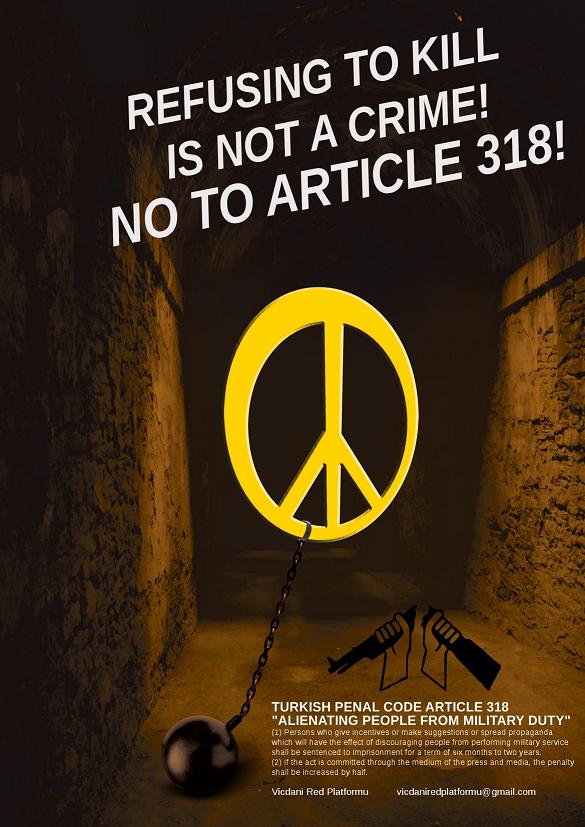
The right to conscientious objection to military service during periods of armed conflict has not undergone significant changes for better or worse.
On the positive side, it is worth noting the recognition of the right to alternative civilian service during mobilisation by all judicial instances. From 2019 to 2021, Pavel Mushumansky performed alternative civilian service instead of military service. In 2022, he was mobilised, but he declared his anti-war beliefs, appealed the decision of the draft board in court, and the court ruled the mobilisation illegal. The draft board then appealed the court's decision, insisting that there is no law specifying the procedure for exercising the constitutional right to alternative civilian service during mobilisation. Pavel Mushumansky remained in the unit at that time but did not handle weapons, take the oath, or wear the uniform. In March, the Leningrad Oblast Court sided with Pavel. It confirmed that the Constitution guarantees the right to refuse military service on grounds of conscience to everyone, regardless of whether there is a corresponding law. In July, the Third Cassation Court upheld the lower courts' decision to declare Pavel's mobilisation illegal. The draft board appealed to the Supreme Court. On November 15, the Supreme Court refused to transfer the draft board's complaint in Pavel Mushumansky's case for consideration at a court hearing. All judicial instances agreed that the absence of legislation providing for the procedure for exercising the constitutional right to alternative civilian service during mobilisation cannot deprive citizens of the right itself.[11]
However, Pavel Mushumansky's case, although positive, does not address the fundamental problem associated with alternative civilian service during mobilisation. Pavel Mushumansky's case is significantly different from many others in that he successfully replaced regular conscription with alternative civilian service. At the same time, in 2023, a separate judicial practice was formed in favour of draft boards, which won cases against citizens mobilised for war who sought to replace military service with alternative civilian service. The main argument of the draft boards in court was the fact that there is no legislation providing for the provision of alternative civilian service during mobilisation.
In the sphere of compulsory conscription into military service, the situation regarding alternative civilian service remains complex. During 2023–2024, there were no significant changes to this procedure. However, negative trends have emerged in judicial practice. For example, the Movement of Conscientious Objectors has taken up the case of an applicant who was accused of committing a criminal offence under Article 328 of the Criminal Code of the Russian Federation ("Evasion of military service") for repeatedly appealing to the court the refusal to replace military service with alternative civilian service. Russian legislation still allows appealing the refusal to replace military service with alternative civilian service in court and not to go to the place of military service during the appeal process. Potential conscripts can appeal refusals in court and even try to reapply for alternative civilian service despite a negative court decision.
– Obstruction to work of NGOs
During 2023–2024, the Russian authorities continued to put pressure on non-governmental organisations (NGOs), associations, human rights projects, and initiatives.
Individuals and legal entities continue to be declared foreign agents through extrajudicial means. At the same time, the deputies of the State Duma of the Russian Federation continue to adopt new laws aimed at restricting the activities of such individuals. The "undesirable organisation" construct is actively applied. While it may still be relatively safe to officially cooperate with a "foreign agent," any cooperation with an "undesirable organisation" can lead to criminal prosecution.
The so-called fight against extremists and terrorists continues. Extremist organisations, as well as non-existent associations, are being liquidated and recognised as extremist through the system of general jurisdiction courts. In November 2023, the Supreme Court of the Russian Federation recognised an alleged international public movement "LGBT" as an extremist organisation on the territory of Russia. This decision has already led to administrative and criminal cases. For example, in Saratov, a young woman was arrested for five days for wearing rainbow-coloured earrings.[12]
In June 2023, the Ministry of Justice included the Movement of Conscientious Objectors and its director, Saša Belik, in the register of foreign agents.[13] In November, parallel to the liquidation and recognition as extremist of the international public movement "LGBT," Russian state television channels aired several items in which they referred to the Movement of Conscientious Objectors as a structural element of the international LGBT movement.
Such actions have forced the Movement of Conscientious Objectors to suspend crowdfunding from individuals with Russian accounts who are located within the territory of Russia.
[1] It might be noted that conscription into the Russian army takes place also, illegally, in annexed Ukraine and the occupied areas of Ukraine; the effect on the figures given above is however minimal.
[2] More info about the organisation at: https://stoparmy.org/en/
[3] Lawyers and human rights activists cannot say for certain whether draft boards will attempt to conscript citizens aged 27 to 29 for military service. Most likely, the first practice on this issue will either emerge or not emerge in April 2024.
[4] It is worth noting that during the editing stage of the final text, we paid attention to the fact that all military offices in Moscow have been consolidated into a "Unified Drafting Point for Compulsory Military Service." The directive to create a unified draft commission specifically mentions that such a commission will utilise federal and regional information systems and resources, electronic interaction tools, and electronic signatures. There is a presumption that we may see a test launch of the electronic military registry in Moscow as early as April 2024.
[5] All health status categories applicable in Russia are as follows: "A" – fit for military service; "Б" – fit for military service with minor restrictions; "В" – partially fit for military service; "Г" – temporarily unfit for military service; "Д" – permanently unfit for military service.
[6] Student media publish stories about how volunteers serve in the army. One example is the student publication of the National Research University Higher School of Economics (HSE) in Russia. URL: https://www.hse.ru/our/news/851881504.html
[7] https://zona.media/news/2023/12/29/5000-500
[8] We have no grounds to trust the figures provided by the Ministry of Defence of the Russian Federation.
[9] https://www.currenttime.tv/a/russian-soldiers-border-hotspots/32340390.html
https://www.svoboda.org/a/my-ne-hoteli-voevat-minoborony-rossii-ne-pomnit-svoih-soldat/32617942.html
[10] https://www.interfax.ru/world/827191
[11] https://www.rbc.ru/politics/17/03/2023/641383809a79472ddbf00689
[12] https://www.svoboda.org/a/zhiteljnitsu-nizhnego-novgoroda-arestovali-za-raduzhnye-seryozhki/32800152.html